



If you told me ten years ago that two of a patient’s molars would actually join forces and present as a single, formidable opponent in my surgical chair, I might have laughed it off as dental folklore. Yet not only did it happen, it ended up changing how I approach every case—even the most routine ones. Join me as we unravel the curious tale of fused molars: what they teach us about thinking three steps ahead, why you’ll want your imaging team on speed dial, and how insurance sees these unicorn cases.
Fused Molars: When Two Teeth Become One (And Upend Your Morning)
Let’s talk about a dental anomaly that can truly upend your morning: the tooth fusion phenomenon. Imagine starting your day, reviewing a panoramic X-ray, and spotting what looks like a double exposure—except it’s not. It’s a fused molar, a rare sight that instantly changes your surgical plan and documentation checklist.
Tooth fusion happens early, during the bell stage of odontogenesis. In simple terms, two neighboring tooth buds unite, forming a single, enlarged, or oddly shaped tooth. This isn’t just a curiosity for textbooks; it’s a clinical reality, albeit a rare one. The numbers don’t lie: fusion between an erupted second molar and an impacted third molar is seen in ≤0.1% of permanent teeth. When it does occur, it’s usually discovered by accident—often on a routine X-ray or during a tough extraction.
Here’s where terminology matters. Fusion means a dentinal union—two teeth joined by their dentin. Concrescence is different; that’s when teeth are joined only by cementum. Then there’s gemination, where a single tooth bud tries (and fails) to split into two. Getting these terms right isn’t just academic. It’s crucial for surgical planning, insurance coding, and ultimately, patient outcomes. As Dr. William Gray puts it:
Fusion between molars may be rare, but when you spot one, precise documentation is your best friend.
Spotting a fused molar before you start surgery is key. Panoramic X-rays can reveal an irregular root silhouette or a missing periodontal ligament space between molars. Limited-field CBCT imaging confirms shared canal morphology and helps map out nerve or sinus proximity—critical for safe fused molars surgical separation. Intra-op periapical films help check for root fractures after sectioning. For documentation, it’s smart to note findings like: “CBCT revealed conjoined dentin mass and common furcation; standard extraction risked root fracture and neurosensory injury. 3-D imaging medically necessary for safe ostectomy/sectioning.”
When it comes time for surgery, preparation is everything. Here’s a quick checklist:
- Anesthesia & Consent: Discuss extended time and possible nerve or sinus risks.
- Flap Design: Triangular flap with distal release for better access.
- Buccal Corticotomy: Make a wider window—fused teeth are bulkier.
- Strategic Sectioning: Split along the fusion line if canals are separate, or remove the crown en bloc and trephine roots.
- Instrumentation: Use long-shank carbide burs, plenty of irrigation, and the right forceps.
- Closure: Suture with 4-0 chromic or PTFE; use PRF for defects over 5 mm.
- Post-op: Consider a 7-day dexamethasone pack if the ostectomy was extensive.
Documentation and billing for ICD-10 dental anomalies require precision. For example, removal of a fused, fully bony impacted third molar with an attached erupted second molar should be coded as CDT D7240 + D7210, with ICD-10 K00.8 (developmental anomaly) and K08.1 (extraction). Add D0367 for CBCT if imaging was medically necessary. Attach photos and CBCT screenshots to support your claim and pre-empt down-coding.
In the end, knowing your terms and documenting every step can make the difference between a teaching case and a billing nightmare. The first time I saw a fused molar, I thought it was a film error. Spoiler: it wasn’t. Now, I know to look closer, document thoroughly, and prep my team for the unexpected.
Getting Ahead with Imaging: The Real-World Power of CBCT and a Keen Eye
When it comes to extracting fused molars, nothing replaces the value of a sharp eye and the right imaging tools. In my experience, panoramic X-ray detection is often the first clue that something unusual is happening. If you spot an absent periodontal ligament (PDL) space or an irregular root outline between adjacent molars, pause. These subtle signs can point to a fused tooth—a rare phenomenon where two tooth buds unite during development, sometimes even involving a supernumerary tooth. Research shows that fusion is extremely uncommon, affecting less than 0.1% of permanent dentitions, but when it does occur, the surgical implications are significant.
For me, the real game-changer has been CBCT imaging for fused teeth. Panoramic X-rays (CDT D0330) are helpful for initial detection, but limited-field CBCT (CDT D0367, typically 5 × 5 cm) is the gold standard. CBCT confirms whether there’s a shared canal system, reveals the proximity of roots to the inferior alveolar nerve or sinus, and highlights any surgical anomalies. This level of detail is not just about surgical safety—it’s also about documentation. Insurers want to see clear, annotated evidence that a case is complex and medically necessary. As Dr. William Gray puts it:
Three-dimensional imaging isn’t just a luxury—it’s how we avoid disasters and keep patients safe.
I learned this lesson the hard way. Early in my career, I once skipped 3D imaging to save time, relying only on a panoramic X-ray. I nearly missed a conjoined root mass dangerously close to the nerve. That near-miss changed my approach. Now, I always include CBCT imaging in my surgical checklist for tooth extraction, especially when fusion is suspected. The clarity it provides can be the difference between a straightforward procedure and a surgical complication.
During surgery, intra-operative periapical radiographs (CDT D0220/D0230) are essential after sectioning. They help check for root fractures or other risks before closure. Each imaging step should be documented thoroughly. For insurance, I make sure to include:
- Annotated screenshots from CBCT scans
- Clear clinical notes describing the fused anatomy and surgical risks
- Justification for the use of advanced imaging (e.g., “CBCT revealed conjoined dentin mass and common furcation; standard extraction risked root fracture and neurosensory injury. 3-D imaging medically necessary for safe ostectomy/sectioning.”)
Precise, image-based documentation doesn’t just streamline insurance approval—it also protects the patient and the provider. Studies indicate that using CBCT imaging and panoramic X-ray detection as part of a surgical checklist for tooth extraction leads to safer outcomes and fewer surprises. And when it comes to dental coding extraction, thorough documentation with the correct CDT codes (like D0330, D0367, D0220, D0230) ensures proper reimbursement for these complex cases.
In the end, investing a few extra minutes in imaging pays off. It’s about seeing the whole picture—literally and figuratively—before you ever pick up a scalpel.
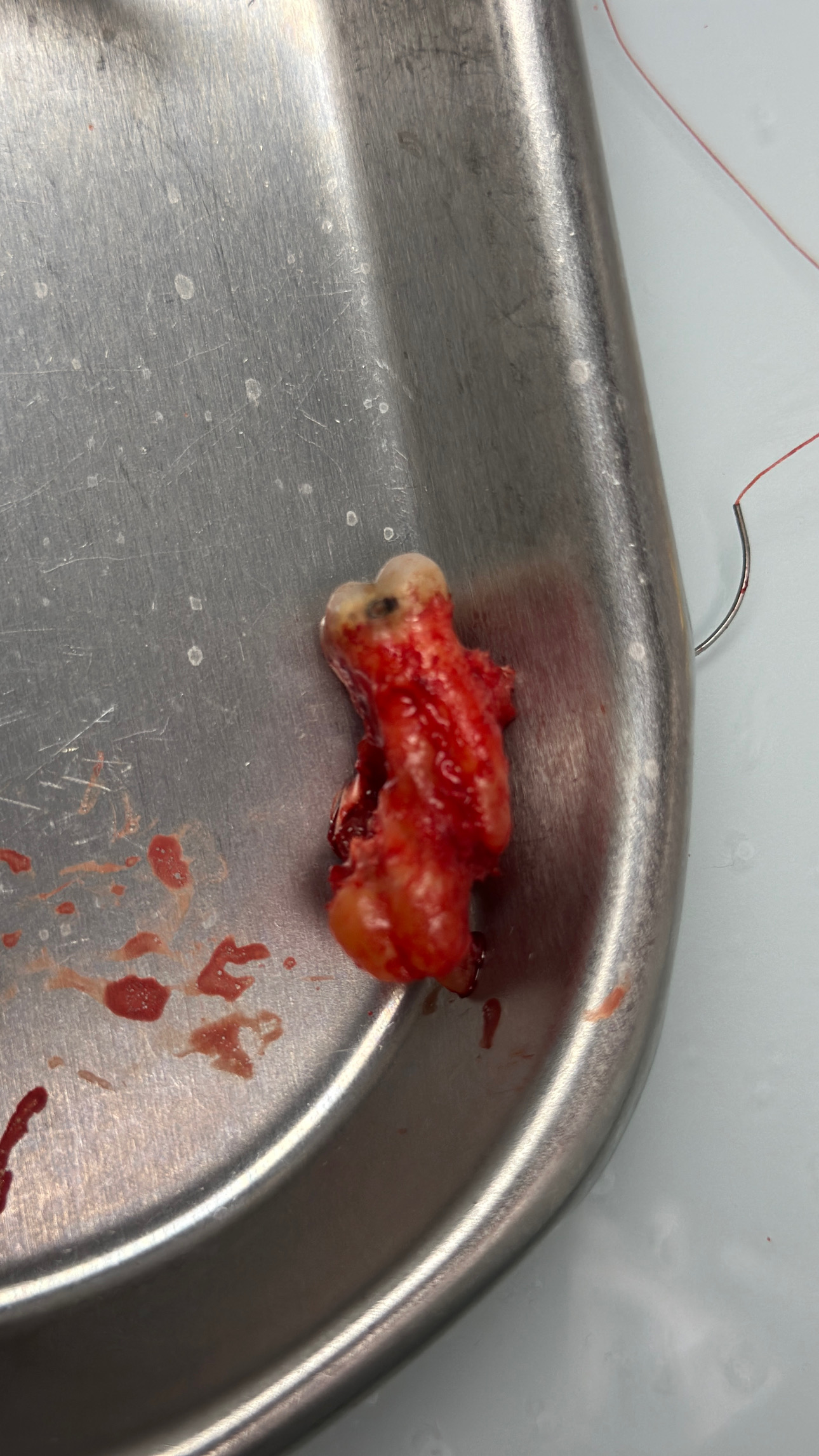
Showtime: Surgical Planning, Pitfalls, and Post-Op Wisdom
When it comes to oral surgery extraction of fused molars, the difference between a smooth case and a surgical headache is all in the planning. Fused teeth, especially when they involve a second and third molar, demand a unique approach. Here’s how I tackle these rare cases, from anesthesia fused molars to the last suture.
Anesthesia and Patient Counseling: The First Step
Don’t rush the anesthesia discussion. Fused molars often sit close to nerves or the sinus, and the operating time is almost always longer than a standard extraction. I make sure patients understand these risks and the possibility of extended numbness or swelling. Research shows that clear consent and expectation-setting reduce anxiety and improve outcomes.
Surgical Checklist Tooth Extraction: Flap Design and Access
My go-to for access is a triangular flap with a distal release. This design gives me the best visibility and bur access, especially since the bulk of a fused tooth can be surprising. The buccal corticotomy often needs to be wider than usual—think of it as making room for two teeth in one. If you’re dealing with separate canals, strategic sectioning along the fusion line is key. For united canals, I’ll remove the crown en bloc and then trephine the roots. Long-shank carbide burs and copious irrigation are essential here.
Documentation: Your Shield in Unusual Services
Every detail matters. I document everything: the extended surgical time, the unusual anatomy, and any intraoperative findings. This isn’t just for my records—it’s vital for dental billing unusual services. I use specific CDT and ICD-10 codes (D7240 for completely bony impaction, D7210 for extraction of erupted tooth, K00.8 for developmental anomaly, K08.1 for extraction). Attaching de-identified photos and CBCT screenshots can help pre-empt insurance down-coding.
Closure and Defect Management
For closure, I prefer 4-0 chromic or PTFE sutures. If the defect is larger than 5 mm, platelet-rich fibrin (PRF) is my go-to for promoting healing. Studies indicate that meticulous closure and use of biocompatible materials can help prevent deep periodontal pocket formation, a common risk after root hemisection technique or fused molar extraction.
Post-Op Wisdom: Monitoring and Follow-Up
Post-operative care is where many pitfalls can be avoided. I always check baseline sensation and compare it at 72 hours, watching for any signs of neurosensory disturbance. I share post-op radiographs with the restorative team and schedule a one-week suture check, plus a six-week bone-fill follow-up. Once, I underestimated the swelling after a fused molar extraction—a 7-day steroid pack (dexamethasone or Medrol Dose-Pak) saved the day and the patient’s comfort.
Thorough preparation transforms a nerve-racking extraction into a routine procedure—and makes you the go-to for complex cases. – Dr. William Gray
In the end, it’s the combination of a detailed surgical checklist tooth extraction, careful anesthesia planning, and rigorous documentation that sets the stage for success in these challenging cases.
Wild Card Wisdom: Sharing Rare Cases for Team Growth and Accountability
Every so often, a case comes along that challenges everything we know about surgical preparedness and teamwork. Fused molars—those rare instances when two teeth literally team up—are a perfect example. These cases are more than clinical curiosities; they’re opportunities to grow, teach, and strengthen our practices. Sharing these extraordinary findings during team huddles or study clubs doesn’t just position you as an expert; it lifts the skill level of everyone around you. As Dr. William Gray puts it,
Sharing knowledge on rare dental anomalies elevates the whole team’s preparedness.
When it comes to referral complex dental cases, especially those involving fused molars, it’s easy to feel the pressure to handle everything in-house. But research shows that referral is sometimes the smartest—and safest—move. Fused molars are like two puzzle pieces glued together. Sometimes, with careful planning and the right surgical checklist for tooth extraction, you can separate them. Other times, you need to remove the entire puzzle block to avoid complications. Recognizing when to refer, rather than wrestle blindly, is a mark of true clinical maturity.
Documenting and presenting rare cases like these not only enhances your own reputation but also serves as a valuable educational tool for your team and colleagues. It’s about more than just the surgery—it’s about building a culture of accountability and continuous learning. Providing resources like fillable referral forms, CBCT interpretation guides, and coding quick-cards ensures that everyone is equipped to handle the unexpected. These tools keep your team sharp and ready for whatever walks through the door.
Interdisciplinary collaboration is essential when tackling tricky cases. Sharing your experiences with fused molars, from diagnostic imaging to post-op follow-up, encourages open dialogue and helps everyone stay up to date on best practices. It also enables your practice to become a regional hub for challenging surgical cases, attracting referrals and building trust within the dental community. Studies indicate that sharing rare cases and resources fosters expertise and improves clinical outcomes for everyone involved.
Ultimately, the goal is to create an environment where team members feel comfortable discussing unusual findings, asking questions, and seeking help when needed. By openly sharing both successes and lessons learned, we not only improve patient care but also support each other’s professional development. In the world of complex dental surgery, no one should have to go it alone. So, the next time you encounter a wild card case, remember: share it, document it, and use it as a springboard for growth. That’s how we turn rare challenges into everyday strengths—and ensure our teams are always ready for the unexpected.
